Machine study · 10 prompts
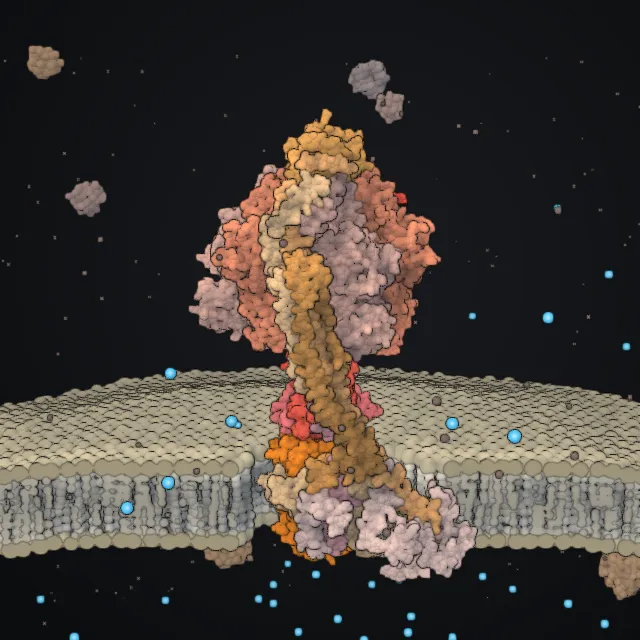
ATP synthase
The 10 review prompts from the notes on ATP synthase. Answer each in your head, then reveal it. Your grade decides when the card comes back.
Loading your progress…
ATP synthase sits in the inner membrane of your mitochondria. Pumps in that membrane push protons to one side. What does ATP synthase use to make ATP?
The head of ATP synthase has three catalytic sites, and each makes one ATP as the stalk turns past. So one full turn of the rotor makes blank ATP.
Tuberculosis bacteria need their own ATP synthase to live. How does the tuberculosis drug bedaquiline stop it?
Protons flow back into the mitochondrion through ATP synthase, like water through a mill. What does that flow do to the part of the machine in the membrane?
The spinning ring turns a stalk that reaches into the head of the machine, where ATP is made. What does the turning stalk do to the catalytic sites in the head?
ATP synthase can work like a turbine or like a pump. With plenty of ATP but a weak proton gradient, which way does it run, and what does it do?
In a working mitochondrion, the rotor of ATP synthase spins very fast. Roughly how many turns does it make each second?
Your body remakes ATP all day, almost all of it in ATP synthase. Roughly how much ATP does a person remake each day?
The bacterial flagellar motor runs on the same kind of proton gradient as ATP synthase. What does it make from that proton flow instead of ATP?
Researchers took the head of ATP synthase without its membrane part and turned its stalk with magnets. No protons were present. What did this show about how the machine makes ATP?
Hand off to your agent
Keep your reviews going somewhere else. The button copies a prompt for your own AI agent: where to find the 130 cards, how to schedule them, and your progress so far. The agent stores them in its own database and reminds you when cards are due.
- JSON, 0 cards
- ATP synthase cards JSON, 10 cards
- Cards for Anki File → Import
- All cards JSON, versioned